In this guide
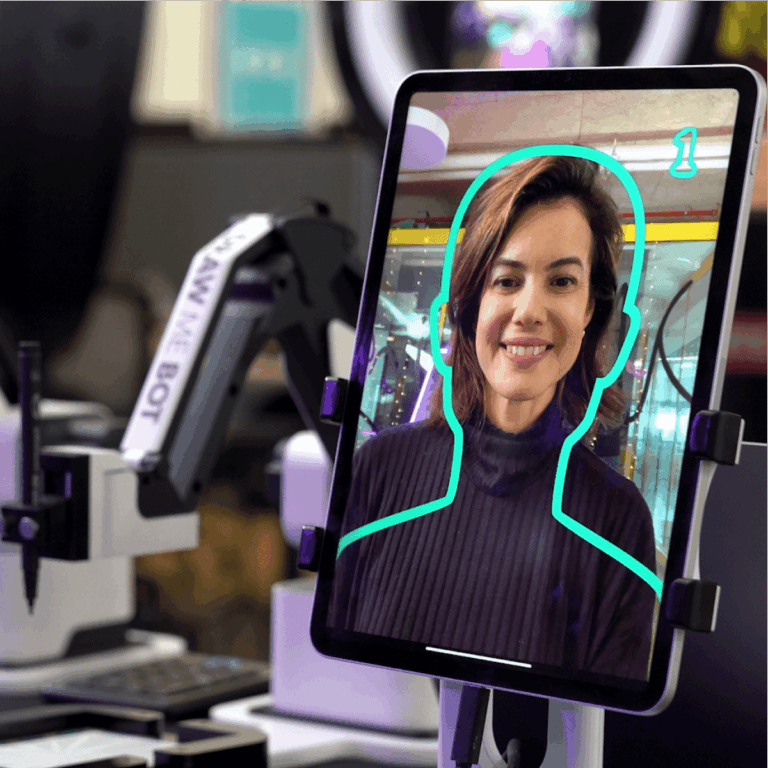
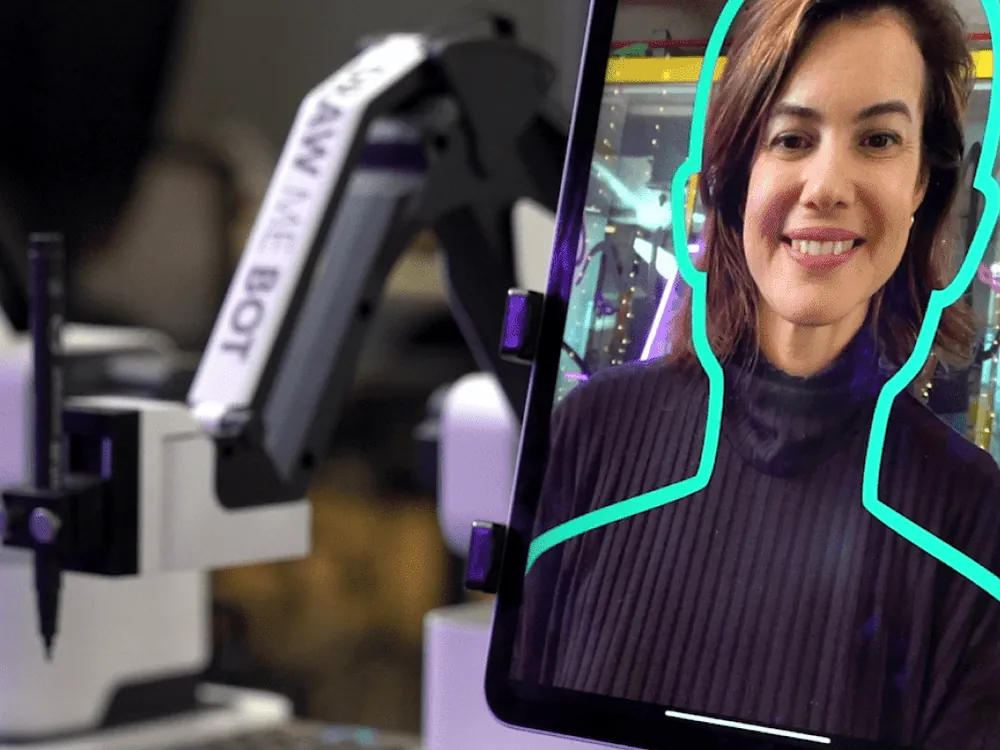
Featured image: equipment demonstration showing a drawing robot and photo tablet.
The hardest part of choosing corporate event entertainment is not finding ideas.
It is deciding what you need the entertainment to do.
A DJ can be excellent if you want a dance floor. A stage performer can give the whole room one shared experience. Trivia can get tables working together. A photo booth is useful for group pictures. Robot portraits give guests a drop-in activity to watch and a physical drawing to take home.
Those are different jobs.
Before asking for quotes, finish this sentence:
“We want the entertainment to help our guests ______.”
Meet colleagues from another department? Relax after dinner? Have something to do during a reception? Participate together? Dance? Leave with something from the event?
Once you know that, the shortlist gets much easier.
Hosting clients? See our client appreciation event ideas guide to choosing a format around hospitality and conversation.
Which type of corporate entertainment fits your goal?
| Your main goal | Options worth considering |
|---|---|
| Give people something to do while mingling | Robot portraits, roaming entertainer, photo booth, live artist |
| Create one shared moment for the whole room | Stage show, hosted game or trivia |
| Get people dancing | DJ or live band |
| Encourage friendly competition | Trivia, game show, interactive game stations |
| Give colleagues something to take home | Robot portraits, photo booth, caricature or sketch artist |
| Get groups of colleagues into photos together | Photo booth |
| Give quieter guests an optional activity | Robot portraits, live artist, photo booth |
| Keep entertainment moving through the room | Roaming magician or other close-up performer |
| Capture the evening rather than entertain | Event photographer |
On a small screen, swipe the table to see all columns.
You do not need to choose the option with the biggest spectacle.
You need the one that fits your people, schedule and room.
1. Robot portraits: for drop-in entertainment with a physical keepsake
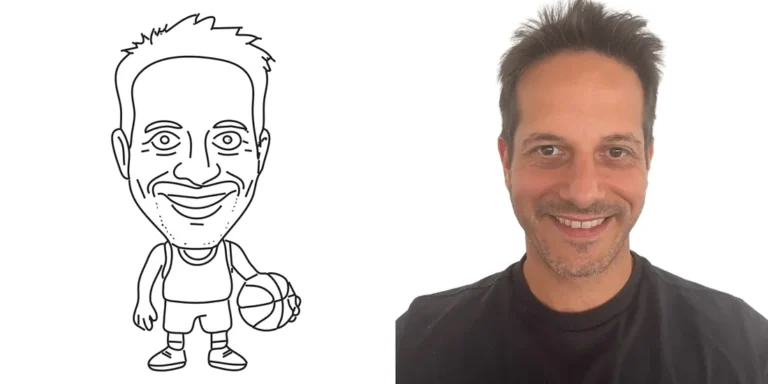
With Robo Portraits, a guest has a photo taken, chooses a portrait style and watches a physical robot draw the portrait in pen.
The finished drawing goes home with them.
That makes it different from entertainment where everyone has to stop and focus on the same thing at once. Colleagues can talk, eat, watch someone else’s portrait or have their own drawn during the booked drawing window.
The process itself is visible, so someone does not need to be the person currently getting a portrait to watch what is happening.
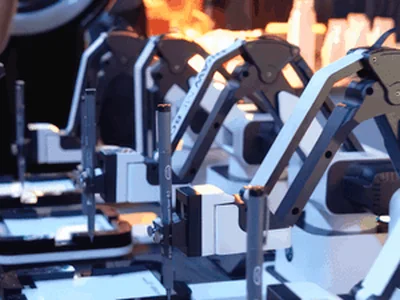
See how a robot portrait is created
A good fit when:
- the event has a reception or mingling period;
- you want participation to be optional;
- you want a physical takeaway;
- different departments or groups will be circulating through the room;
- you want entertainment that can run alongside other parts of the event rather than commanding the entire room.
Less suited when:
- your main goal is dancing;
- you want everyone participating together at exactly the same time;
- your priority is quick group photographs;
- you need every attendee to complete the activity during a very short window.
Capacity matters.
Robo Portraits uses a conservative planning figure of approximately 22 portraits per robot-hour. With two robots over two hours, plan on roughly 90 portraits.
That is approximate capacity, not a promise that every person attending will receive a portrait.
For a 150-person company party, the useful question is not necessarily “How do we draw 150 people?”
It may be:
“Would we be happy if roughly 90 people had the opportunity to get a portrait while everyone else chose among the other things happening?”
That distinction can save you from buying capacity you do not actually need.
For an exhibition booth, see our trade show booth ideas guide to aisle visibility, attendee flow and conversations.
2. A DJ or live band: when music is supposed to drive the evening
If you want people dancing, hire entertainment designed to make people dance.
That sounds obvious, but companies sometimes book several interactive activities and then discover that what they really wanted was a lively dance floor after dinner.
A DJ gives you flexibility across musical styles and can usually adapt as the room changes.
A live band gives the music a stronger performance element. Guests may watch the band as well as dance.
A good fit when:
- the social portion of the evening is long;
- the team enjoys dancing;
- music is important to the atmosphere;
- you want the energy to build after dinner or awards.
Think twice when:
- conversation is the main purpose of the event;
- many guests are unlikely to dance;
- the room makes it difficult to separate conversation from loud music.
Music and another form of entertainment can also complement each other.
A staff party might use music throughout the evening while offering a drop-in activity for colleagues who would rather talk, watch or participate in something off the dance floor.
3. A stage performer: when you want everyone focused on the same thing
A comedian, magician, mentalist or other stage act can create something most drop-in entertainment cannot:
one moment the entire room experiences together.
That makes stage entertainment useful when you want a clear centrepiece to the evening.
The trade-off is scheduling.
You need a defined performance period. Guests must be able to see and hear it, and other activity in the room usually needs to quiet down.
A good fit when:
- you have a seated dinner;
- there is a natural performance window after the meal;
- you want entertainment to be one of the main items on the program;
- the room has appropriate sightlines and sound.
Questions to ask:
- How long is the performance?
- What room layout works best?
- Does the performer require a stage?
- What audio or lighting is required?
- How much audience participation is involved?
- How does the performer handle people who do not want to participate?
- Is the material appropriate for a workplace audience?
That last point matters.
Corporate crowds contain supervisors, employees, clients, spouses and people with very different comfort levels. Understand the style of the show before booking rather than assuming that “corporate entertainment” automatically means the same thing to every performer.
4. A roaming entertainer: when the event is built around mingling
A stage show asks the room to stop.
A roaming performer does almost the opposite.
A close-up magician or similar entertainer moves between small groups while the event continues around them.
This can work well during cocktails, networking periods or less structured company celebrations where there is no obvious time for a formal show.
A good fit when:
- guests are standing and circulating;
- you do not want to interrupt conversation for a performance;
- the room contains several small social groups;
- entertainment needs to work around food and drinks.
The personality of the performer matters here.
They are entering people’s conversations, so ask how they approach groups that are already talking and how they handle guests who would rather watch than participate.
For networking-heavy events, that can matter more than the trick itself.
5. Hosted trivia or a game show: when you want colleagues participating together
Trivia is useful because the entertainment is created partly by the guests.
Instead of watching a performer, tables or teams work together.
It can be especially useful when employees normally work in separate departments, locations or crews and you would like the event to give them a reason to interact.
You can use general questions, themed rounds or modest amounts of company-specific material.
Avoid turning it into a test about the workplace.
The goal is entertainment, not discovering who remembers the most facts from the employee handbook.
A good fit when:
- you want table-based interaction;
- guests will already be seated;
- friendly competition suits the company culture;
- you want a defined activity without a long formal performance.
Watch the timing
Trivia works best when it has a clear place in the program.
Trying to host questions while servers are taking orders, leadership is preparing to speak and half the room is still at the bar creates unnecessary competition for attention.
Give the activity its own window.
6. A photo booth: when group pictures are the point
Photo booths remain useful for a simple reason:
people know exactly what to do.
Colleagues step in, pose together and get a photo. Depending on the package, the result might be printed, digital or both.
A good fit when:
- colleagues want pictures together;
- several people should be able to participate in one interaction;
- the event already has a social, informal atmosphere;
- props or a themed backdrop fit the event;
- digital sharing is important and included in the chosen package.
If you are comparing a photo booth with Robo Portraits, think about the desired output.
A photo booth is usually the stronger fit when the important moment is several colleagues posing together.
Robo Portraits is more focused on watching a drawing take shape and taking home the resulting portrait.
For the broader three-way comparison, see the existing guide to robot portraits, caricature artists and photo booths. Compare robot portraits, caricature artists and photo booths
7. A caricature or live sketch artist: when the artist interaction is part of the experience
A live artist offers something quite different from a technology-based attraction.
The guest can talk directly to the person drawing them.
That conversation, the artist’s personality and their interpretation of the guest can be as important as the final drawing.
A good fit when:
- guests appreciate personal interaction;
- you want an original physical keepsake;
- the pace of the event allows people to sit or stand for a drawing;
- the artist’s style fits the tone of the company event.
Ask to see examples before booking.
Caricature styles can range from relatively flattering to deliberately exaggerated. Make sure the style you book is appropriate for your crowd.
Also ask about realistic hourly capacity. A beautiful drawing style that takes longer may be perfect for 30 guests and problematic if 150 people are expected to participate.
If those are your final two options, compare robot portraits with a live caricature artist in detail.
8. Interactive game stations: when friendly competition fits your team
Sometimes the best entertainment is something guests do rather than something they watch.
Depending on the venue, that could include:
- golf or sport simulators;
- arcade-style games;
- table games;
- short team challenges;
- skill competitions;
- simple tournament formats.
These options can give colleagues a natural reason to watch one another and compare results.
A good fit when:
- the group enjoys friendly competition;
- you have enough space;
- guests can participate in short turns;
- you want the activity itself to generate conversation.
Ask about throughput
A game that looks impressive may serve only one person every several minutes.
For a large event, ask:
How many people can actively participate each hour?
Then compare that with your attendance and how long the station will operate.
The same capacity question applies to virtually every interactive attraction.
What if the real goal is photographs of the event?
Then you may not need entertainment at all.
You may need a photographer.
A professional event photographer solves a different problem from a photo booth or interactive attraction. Rather than asking guests to visit a station, the photographer documents the room, presentations, awards, candid conversations and other parts of the event.
If the company wants useful photographs afterwards for internal communications, social media or future event promotion, budget for photography based on that goal.
Do not expect entertainment to automatically replace event documentation.
Likewise, do not expect a photographer to give guests something to do.
Match the entertainment to the schedule
A good entertainment choice can still fail if it is placed at the wrong point in the evening.
Consider a common company-party structure:
| Part of event | What guests are doing | Entertainment that can fit |
|---|---|---|
| Arrival and cocktails | Arriving, talking, finding colleagues | Drop-in activities, roaming entertainment, light music |
| Dinner | Eating and talking | Background music; avoid competing activities that pull guests away if dinner matters |
| Awards or leadership remarks | Listening | Pause competing entertainment |
| Post-dinner social time | Mingling, dancing, moving around | DJ/band, portraits, photo booth, live artist, games |
| Late evening | Smaller group remains | Entertainment that can scale down naturally |
On a small screen, swipe the table to see all columns.
The point is not that every corporate event needs this sequence.
It is that entertainment should support what guests are already supposed to be doing.
If leadership wants everyone’s attention at 8:00 p.m., do not schedule the most popular interactive activity to hit peak demand at 8:00 p.m.
If your event includes awards, an auction or a fundraising program, our gala entertainment guide focuses on fitting activities around the formal agenda.
One strong activity is often better than four mediocre ones
Corporate planners can fall into the trap of trying to entertain every person every minute.
Usually you do not need to.
If you already have:
- good food;
- music;
- colleagues who want time to catch up;
- a short awards or recognition program;
- one strong optional activity;
you may have enough.
Adding more entertainment also adds more space requirements, supplier coordination, setup access and competing points of attention.
Before booking a second or third activity, ask:
What problem does this one solve that the first one does not?
A DJ plus a portrait station makes sense because one serves dancers and the other gives non-dancers an activity.
A photo booth plus a photographer can make sense because one is participatory while the other documents the event.
Three different stationary keepsake activities may simply divide the same guests among three lines.
Make participation comfortable
A work event is not the same as a private party with close friends.
Some employees will happily sing karaoke, enter a competition or volunteer for a stage show.
Others will not.
Neither group is wrong.
A good corporate entertainment plan lets people participate without making participation feel compulsory.
That can mean:
- optional stations;
- team activities rather than individual performance;
- watching without taking part;
- avoiding humour that relies on embarrassing employees;
- giving guests different ways to enjoy the evening.
Accessibility deserves the same attention. Think about physical access to activities, seating, communication needs and whether guests can participate comfortably. The Government of Canada’s inclusive event-planning guide provides a useful broader checklist for reducing barriers. Canada
Seven things to ask every entertainment provider
You can compare very different entertainment categories if you ask each provider the same basic questions.
1. What does a guest actually do?
Do not settle for “interactive.”
Ask for the guest experience from beginning to end.
2. How many people can participate?
Ask about realistic capacity over your booked period, not an ideal maximum under perfect conditions.
3. Does everyone participate at once?
This determines where the activity fits in your schedule.
A stage show and a drop-in portrait station should not be planned the same way.
4. What space and venue support are required?
Confirm the actual setup with the provider and venue before booking.
Ask about floor space, setup access, power, sound and any other requirements relevant to that particular activity.
5. Who runs it?
Find out whether the supplier provides staff or whether someone from your company will be expected to supervise.
6. What does the guest leave with?
Possibilities include a drawing, photograph, video, prize—or nothing, if the experience itself is the point.
There is nothing wrong with any of those answers. Just know which one you are buying.
7. What is included in the quote?
Compare:
- active entertainment time;
- staffing;
- setup and teardown;
- take-home items;
- customization;
- travel;
- taxes;
- any additional charges that could apply to your specific schedule.
Headline prices are only useful when the scopes are comparable.
Where Robo Portraits fits a corporate event
For staff and corporate parties, Robo Portraits starts from $1,395 CAD before applicable taxes for two robots and two hours.
The standard package includes staffing, setup, operation and the physical portraits drawn during the booked window on standard Robo Portraits cards.
Two robots have an approximate two-hour capacity of 90 portraits.
Custom cards using your company’s design are available as an optional add-on.
Digital copies can also be arranged before the event, but they are not a standard inclusion.
Your quote shows every line before you book.
See the current staff and corporate-event package
Robo Portraits serves Winnipeg and Manitoba. Travel is included within Winnipeg and up to 30 km beyond the Perimeter. Events outside Manitoba require an inquiry.
Planning a Christmas or year-end staff party?
There are a few additional considerations for holiday events: when to run entertainment around dinner and speeches, how to provide something for non-dancers and how to plan capacity for a year-end crowd.
Those are covered separately in our dedicated Winnipeg holiday-party guide.
Read the Winnipeg staff Christmas party entertainment guide
Considering Robo Portraits for your company event?
Send us your event date, location, approximate guest count and the period when you want entertainment running.
Those four details are enough to start a useful capacity and scheduling discussion.
Check your event date and request a quote
Frequently asked questions
What is good entertainment for a mixed-age corporate group?
Look for entertainment that does not depend on everyone having the same interests.
Drop-in activities, photo booths, live artists, roaming entertainment and music can work because guests can choose their level of involvement. A stage show or trivia can also work well if the whole group is comfortable participating together.
The important question is not age alone. Consider how social the group is, whether people know one another and how comfortable they are with being the centre of attention.
What corporate entertainment works for people who do not dance?
Robot portraits, photo booths, live artists, roaming performers, trivia and interactive game stations can all give non-dancers another option.
You can still have a DJ or band. The goal is simply to avoid making the dance floor the only way to participate in the evening.
How much should we spend on corporate entertainment?
There is no useful universal figure because entertainment formats are priced differently.
A better approach is to decide what role entertainment plays in your event and compare quotes with similar scopes.
A short stage performance, an all-evening DJ and a staffed interactive station are not equivalent purchases.
How many activities should a corporate party have?
Often one main entertainment feature plus music, food and unstructured social time is enough.
Add another activity when it performs a different job rather than simply adding more things to the room.