In this guide
You probably do not need more entertainment at your wedding.
You need the right entertainment at the right time.
A great DJ during speeches is a problem. A roaming performer during a quiet dinner may be distracting. A photo booth can be excellent after dinner but less useful while everyone is seated. An activity that fills cocktail hour beautifully may become unnecessary once the dance floor is busy.
So before choosing from a list of wedding reception entertainment ideas, map the evening.
Ask:
Where might guests actually benefit from something to do?
For many Winnipeg weddings, that means one or two of these periods:
- cocktail hour or the ceremony-to-reception transition;
- the period before dinner;
- gaps between formal program elements;
- after dinner, when dancing begins;
- later in the evening, when some guests are dancing and others are not.
You do not need to fill all five.
Wedding entertainment by part of the reception
| Part of the wedding | What guests are usually doing | Entertainment that can fit |
|---|---|---|
| Cocktail hour | Mingling, having a drink, waiting for the wedding party | Robot portraits, live artist, roaming performer, lawn games, light live music |
| Dinner | Eating and talking | Background music; usually keep interactive entertainment secondary |
| Speeches and formal moments | Listening | Pause anything likely to compete for attention |
| After dinner | Dancing, circulating, visiting | DJ/band, robot portraits, photo booth, live artist, games |
| Late evening | Dancing or taking breaks | DJ/band, optional drop-in activities, late-night surprises |
The best reception entertainment usually complements the wedding rather than turning the wedding into an entertainment schedule.
Here are eight options worth considering.
1. A DJ or live band: build the evening around music first
For most receptions with dancing, music is the foundation.
A DJ gives you broad musical flexibility and can move between dinner music, formal dances and a livelier dance floor later in the night.
A live band creates more of a performance. That can be a major part of the atmosphere if live music matters to you as a couple.
Consider a DJ or band when:
- you expect dancing to be a major part of the reception;
- you want music to carry the evening from dinner into the party;
- your guests generally enjoy the dance floor;
- you need someone to work around formal dances and other scheduled moments.
If dancing is important to you, get this part right before spending heavily on secondary entertainment.
A robot drawing station, photo booth or magician will not compensate for music that does not suit the room.
2. Robot portraits: give guests something to watch and take home
Robo Portraits works differently from entertainment that asks the entire room to stop.
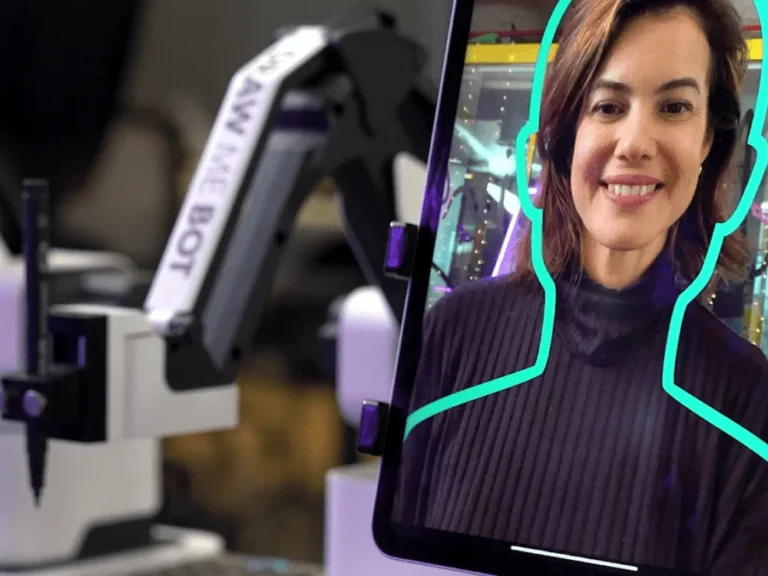
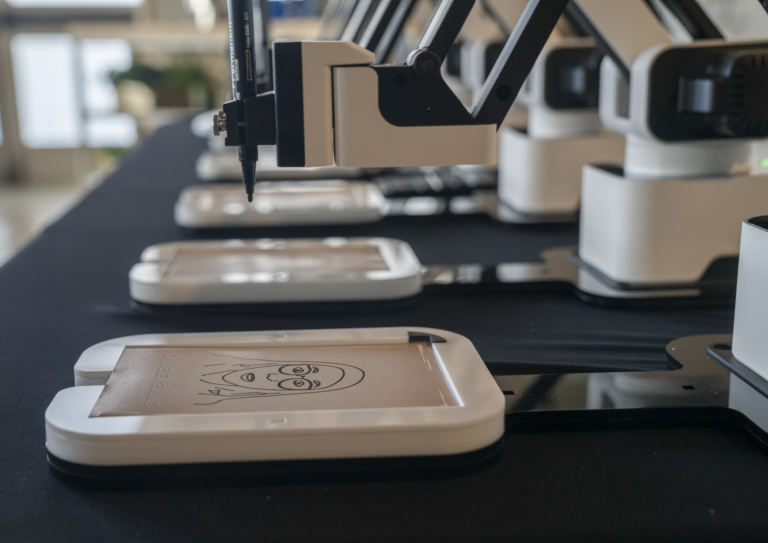
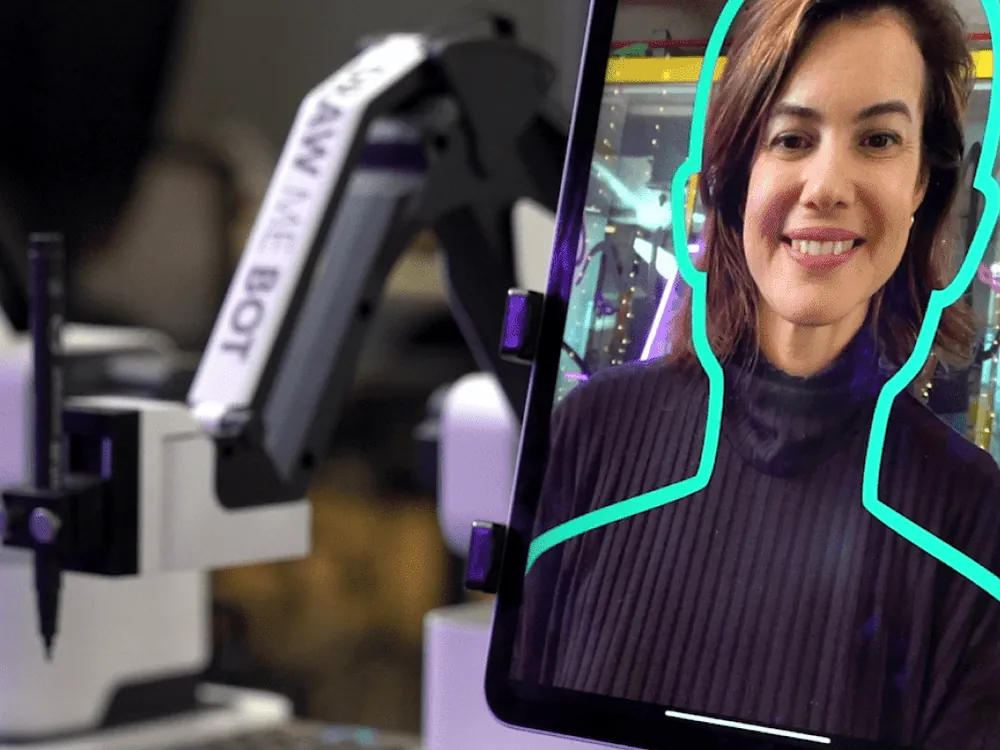
A guest has a photo taken, chooses a portrait style and then watches a physical robot draw the portrait in pen. The finished drawing goes home with them.
That makes it a drop-in activity rather than a scheduled show.
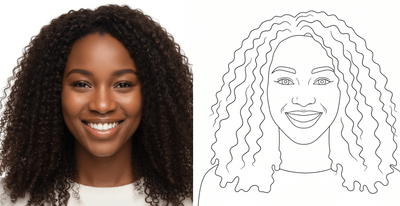
See how the robot-drawing process works
Where does it fit best at a wedding?
There are two obvious windows.
Cocktail hour works because guests are already standing, talking and circulating while the wedding party may be elsewhere taking photographs.
The reception after dinner works because some people will be dancing while others are talking, taking a break or looking for something else to do.
It can also work around the formal program, provided the drawing window is planned so it does not compete with speeches or other moments where everyone should be paying attention.
The current Robo Portraits wedding package starts from $1,195 CAD before applicable taxes for two robots and two hours. It includes staffing, setup, operation and physical portraits on standard Robo Portraits cards.
Two robots provide approximately 90 portraits over two hours for planning purposes.
That is approximate capacity. It does not mean every guest at a 150-person wedding is guaranteed a portrait.
See the Robo Portraits wedding package and planning information
Best when:
- you want an optional activity;
- you like the idea of guests watching something being made;
- you want a physical keepsake;
- not everyone at the wedding will spend the evening dancing;
- you can identify a useful two-hour drawing window.
Less suited when:
- the main goal is fast photos of groups of friends;
- every guest must complete the activity in a very short period;
- you want everyone focused on one performance at the same time.
If group photos are the priority, a photo booth may make more sense.
3. A photo booth: when friends taking pictures together is the point
There is a reason photo booths remain common at weddings.
They are easy to understand.
Friends walk over together, pose and get photographs. Depending on the particular package, guests may receive prints, digital copies or both.
Best when:
- you want couples and groups photographed together;
- guests are likely to visit more than once;
- props or a custom backdrop suit your wedding;
- digital sharing matters;
- the activity should work alongside dancing.
The main comparison with robot portraits is the desired experience.
With a photo booth, taking the photograph is the activity.
With Robo Portraits, the photo starts a second activity: watching the robot turn it into a pen drawing.
Neither is automatically better.
If you picture your wedding party squeezing into photos together at midnight, lean toward the booth.
If you picture a guest standing with friends while a drawing slowly appears in front of them, the portrait experience is closer to what you want.
Our broader comparison guide also looks at robot portraits, caricature artists and photo booths.
4. A live painter or sketch artist: when the human artist matters
Live art can take several forms.
A wedding painter might spend much of the reception creating one scene for the couple.
A caricature or sketch artist may draw individual guests throughout the evening.
Those are very different experiences.
A wedding painter
This is primarily about creating one piece for the couple.
Guests may enjoy checking the painting’s progress throughout the night, but the final work belongs to you.
A guest sketch or caricature artist
This is closer to an entertainment station.
Guests interact directly with the artist and receive individual drawings.
That personal exchange can be part of the appeal. If you value the conversation and interpretation that come from a human artist, this option has an advantage over an automated drawing experience.
Before booking, ask:
- What style do you draw?
- How many guests can you realistically draw per hour?
- Are drawings individual or can you handle couples?
- How long will you be working?
- What space and seating do you require?
- What happens if more people want drawings than the available time allows?
Capacity matters just as much for a live artist as it does for a robot portrait station.
Deciding between individual drawings from an artist and a robot station? Compare robot portraits vs a caricature artist for your wedding.
5. A roaming magician or close-up performer: entertain the groups that already exist
A roaming entertainer can be useful when you do not want another fixed station.
Instead of asking guests to visit an attraction, the performer moves between groups.
That makes close-up magic or similar entertainment particularly compatible with periods when guests are already standing and mingling.
Best when:
- many guests do not know one another;
- you want entertainment brought to the tables or groups;
- there is no natural space for another large station;
- you want short interactions rather than a formal show.
The personality of the performer matters.
At a wedding, they will be entering conversations among relatives, old friends and people meeting for the first time.
Ask how they approach groups and whether guests can simply watch rather than participate.
6. Lawn games or casual indoor games: good when the venue supports them
For an outdoor summer wedding, simple games can give guests something informal to do without imposing a schedule.
Depending on the venue and your crowd, that might include:
- cornhole;
- bocce;
- giant-format games;
- simple table games;
- other short activities guests already understand.
They can work particularly well during cocktail hour.
The important phrase is if the venue supports them.
Outdoor games need enough room, appropriate ground conditions and a backup plan if the weather does not cooperate.
Indoor versions need to avoid blocking walkways, dinner service or access to the bar and dance floor.
Best when:
- your wedding is intentionally casual;
- there is generous usable space;
- guests can join for a few minutes and leave;
- the games fit you as a couple.
You do not need six games.
Two that people actually use are more useful than a field full of activities that look good in photographs but sit empty.
7. A cultural or family performance: when it means something to you
Not all wedding entertainment needs to come from a vendor.
Music, dance or another performance connected to your family or cultural traditions can carry far more meaning than adding an activity because it appeared on a wedding-ideas list.
This works particularly well when it has a clear place in the formal program.
Treat it as a real program element.
Decide:
- when it starts;
- who introduces it;
- how long it lasts;
- where guests should focus;
- what sound or staging is required;
- what other activities should pause.
If the moment is important, give it room to matter.
Do not run three competing attractions while it is happening.
8. A hosted game or short couple-focused activity: use sparingly
A short reception game can work well when your guests know you and are happy to participate.
Examples might include a couple quiz, table challenge or another brief hosted activity.
The key word is brief.
Wedding guests usually want time to eat, talk, dance and visit with people they may not see often.
A ten-minute activity can create a shared moment.
Forty-five minutes of compulsory games can start to feel like a program everyone has to complete before being allowed back to the party.
Best when:
- it reflects your personalities;
- guests can understand it quickly;
- the MC can explain it clearly;
- you know exactly where it fits in the schedule.
If you are adding a game because you are worried guests will otherwise be bored, first check whether the reception actually has a boring gap.
You may not need to fill it.
Start with your reception timeline, not Pinterest
A useful way to plan entertainment is to mark the parts of the evening where guests already have a clear purpose.
For example:
Hypothetical example: these timings illustrate the planning approach.
5:00 — Cocktail hour
Guests mingle while photographs are taken.
6:00 — Dinner begins
Guests sit, eat and talk.
7:15 — Speeches
Everyone’s attention belongs at the front of the room.
8:00 — First dance and dance floor
Music becomes the main entertainment.
9:00 onward — Open reception
Some guests dance. Others circulate, talk or take breaks.
Now look for gaps.
In this hypothetical reception, cocktail hour and the open reception after 9:00 are the two obvious places for additional entertainment.
Dinner and speeches already have a purpose.
That is a much better starting point than asking:
“How many entertainment ideas should we have?”
Before adding another activity
What are guests doing at that time?
Is there actually a gap?
Does this offer something the existing entertainment does not?
Do not make every activity compete at the same time
Imagine this:
The DJ has finally filled the dance floor.
At the same moment, the photo booth opens, a magician starts circulating, dessert comes out and a drawing station begins.
You have just created four reasons for people to leave the dance floor.
That does not mean those ideas are bad.
The timing is bad.
If you are paying several suppliers, ask each one where they fit into the evening and then look at the complete schedule.
You may find that moving one activity an hour earlier makes both services more useful.
Make sure there is something for non-dancers
A strong dance floor is great.
It does not need to be the only thing happening after dinner.
Some guests will dance all night.
Others may dance once and then spend the rest of the evening talking. Older relatives, quieter guests and people who simply do not enjoy dancing may appreciate another option.
That does not mean you need another major performance.
A drop-in activity can be enough:
- portraits;
- photo booth;
- artist;
- casual games;
- lounge or conversation area.
The goal is not to keep every guest continuously entertained.
It is to give people a comfortable way to enjoy the wedding.
Do not forget the people who came to see each other
One of the easiest wedding-planning mistakes is assuming every unscheduled minute needs to be filled.
Guests may have travelled to Winnipeg from different cities.
Families may not have been together for a long time.
Friends may want to sit with a drink and catch up.
That is not a lull in your wedding.
That is part of the wedding.
Entertainment should make those interactions easier or add another option—not constantly interrupt them.
Think about noise before adding another performer
The physical room matters.
A ballroom with a dance floor at one end and a separate reception area may allow several things to happen comfortably.
A smaller hall may not.
Before booking multiple forms of entertainment, ask the venue where each supplier would physically go.
Consider:
- sound from the DJ or band;
- sightlines during speeches;
- space for queues;
- traffic to the bar;
- dinner-service routes;
- entrances and exits;
- accessibility;
- space required by each supplier.
The best activity on paper can become frustrating if guests have to stand in a service aisle to use it.
Plan capacity for anything that creates individual experiences
This applies to:
- robot portraits;
- caricature artists;
- photo booths;
- some games;
- any other attraction used by one person or small group at a time.
Ask:
How many people can realistically participate during the period we are booking?
Then decide how many you actually need.
A wedding with 180 guests does not necessarily need 180 of anything.
Suppose you want about half of those guests to have the opportunity to receive a Robo Portrait.
That target is roughly 90 portraits.
Two robots over two hours have an approximate planning capacity of 90 portraits.
That is a much more useful calculation than saying, “We have 180 guests, so we need 180 portraits.”
Our capacity-planning guide explains how robot count, drawing time and expected participation fit together.
What should you book first?
There is no universal order, but this sequence is useful:
First: protect the important moments.
Ceremony, dinner, speeches, first dances and any cultural or family traditions.
Second: decide what drives the party.
Usually your DJ, band or music plan.
Third: identify the gaps.
Cocktail hour? Room transition? Non-dancers after dinner?
Fourth: add one activity that solves a real problem.
Only then ask whether a second activity adds something genuinely different.
For many receptions, good food, good music, time to talk and one well-chosen interactive feature are plenty.
Where Robo Portraits can fit into a Winnipeg wedding
Robo Portraits is designed as a staffed, drop-in drawing activity.
Guests have their photo taken, choose a portrait style, watch the robot draw in pen and take the physical portrait home.
For weddings, packages start from $1,195 CAD before applicable taxes for two robots and two hours.
Approximate two-hour capacity is 90 portraits with two robots.
Custom cards with your own design, such as names and a wedding date, are available as an optional add-on.
Digital copies can be arranged on request before the wedding; they are not a standard inclusion.
Travel is included within Winnipeg and up to 30 km beyond the Perimeter.
See Robo Portraits wedding packages and timing options
If you want to know whether it fits your particular reception, send your date, location, guest count and the two-hour window you are considering. Those details are more useful than guest count alone.
Check your wedding date and request a quote
Frequently asked questions
Do we need entertainment during dinner?
Usually not much.
Guests are eating and talking, and service staff need to move through the room. Background music may be enough.
If you do run another activity during dinner, consider whether it will encourage guests to leave their tables at an inconvenient time.
Is cocktail hour the best time for wedding entertainment?
It is often a useful time because guests are already mingling and may otherwise be waiting while photographs or room transitions happen.
But the best window depends on your schedule.
What wedding entertainment works for people who do not dance?
Robot portraits, a photo booth, live artists, roaming entertainers and casual games can all give non-dancers another option.
You do not need to replace the dance floor. You are simply giving guests another way to spend part of the evening.
Should we book several entertainment activities?
Only if they perform different jobs.
A DJ plus a drop-in activity makes sense because guests can choose between dancing and another experience.
Several similar stations running at the same time may simply divide participation and consume more floor space.
How many guests can Robo Portraits draw at a wedding?
Use approximately 22 portraits per robot-hour for conservative planning.
Two robots over two hours are approximately 90 portraits. Three robots over two hours are approximately 130.
These are planning capacities, not guarantees that every attendee receives a drawing.