In this guide
A client appreciation event should feel like a thank-you first.
That sounds obvious, but it is easy to overcomplicate.
You invite good clients to an evening “for them,” then give them name tags, a long company presentation, three product updates and a sales rep assigned to every table.
Now it feels like work.
A better starting point is:
What would make these clients genuinely glad they came?
For one business, that might be an excellent dinner with plenty of time to talk.
For another, it might be a casual drop-in reception.
For another, it could be an interesting behind-the-scenes experience, a short educational session or an activity clients can enjoy with a spouse or colleague.
The format should fit the relationships you already have.
Client appreciation ideas at a glance
The right answer depends less on what is trendy and more on how your clients know you.
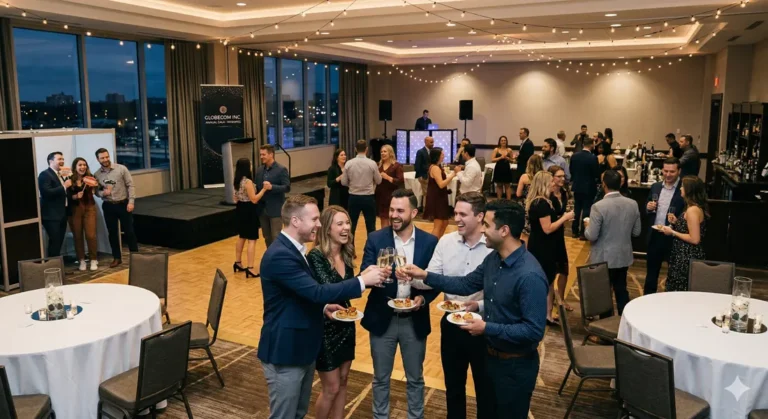
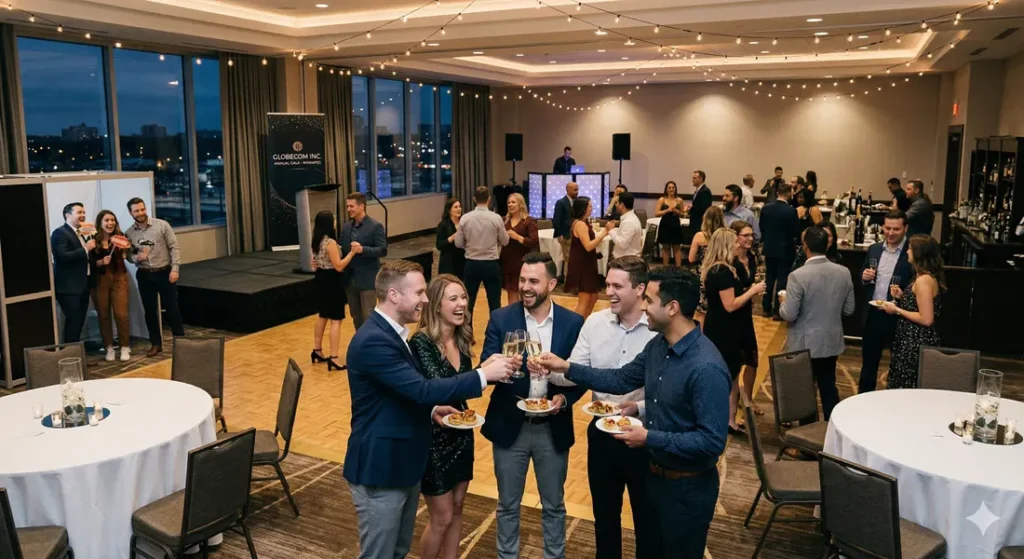
1. Host a client reception or open house
This is one of the simplest formats.
Invite clients to a defined two- or three-hour period. Provide refreshments, somewhere comfortable to talk and perhaps one optional activity.
There does not need to be a detailed program.
That simplicity can be useful for companies with a reasonably large client list because guests can arrive, stay as long as they like and speak naturally with the people they already know.
A good fit when:
- clients already know several people from your organization;
- you want time for informal conversation;
- the guest list is too large for one dinner table;
- clients may arrive at different times;
- you want the evening to feel relaxed rather than programmed.
Give it one anchor
A reception can become vague if the only instruction is:
“Come stand in a room and network.”
Give it one reason to feel like an event.
That might be:
- live music;
- an interesting food experience;
- a short demonstration;
- a live artist;
- robot portraits;
- a brief welcome from the owner;
- access to a space guests would not normally visit.
You do not need five attractions.
One anchor plus good hospitality can be enough.
2. Take a smaller client group to lunch or dinner
For an important group of clients, simple may be better.
A good meal gives everyone something to do while leaving plenty of time for conversation.
There is no queue.
Nobody needs instructions.
No one has to compete in a game or perform in front of the group.
A good fit when:
- you want meaningful conversation with a smaller number of clients;
- senior people from both organizations will attend;
- the relationships matter more than creating a spectacle;
- guests already know one another reasonably well.
This is also a useful reminder:
Not every client event needs entertainment.
If what clients would value most is time with you, give them that.
Keep the speeches short
A genuine thank-you is appropriate.
A 30-minute presentation explaining your strategic priorities for next year may not be.
If there is information the group genuinely benefits from hearing, share it.
Otherwise, say thank you and enjoy dinner.
3. Offer access clients normally would not get
“Exclusive” does not have to mean expensive.
It can mean access.
You might be able to arrange:
- a behind-the-scenes tour;
- early access to something new;
- a private demonstration;
- access to a facility;
- a conversation with an expert;
- a preview before a public launch.
This works best when the experience is genuinely interesting to the client.
The important distinction
A preview can be appreciation.
A two-hour sales demonstration disguised as a preview probably will not feel like appreciation.
If the client has to sit through the pitch before reaching the food and drinks, rethink the format.
Let the interesting access be the experience.
Business can come up naturally afterwards.
4. Teach clients one genuinely useful thing
Some businesses have expertise their clients would appreciate hearing outside the normal sales relationship.
That creates another client-event format:
short useful content + plenty of social time.
For example, a professional-services firm could host:
- a regulatory update;
- an industry outlook;
- a practical planning session;
- a short panel with specialists;
- a Q&A about a problem many clients share.
The important word is useful.
Do not title a presentation:
“Ten Things Every Business Owner Needs to Know”
and then spend 45 minutes describing your services.
Teach the thing you promised.
Keep the proportions right
For a two-hour appreciation event, the educational portion does not necessarily need to consume most of the evening.
A hypothetical format might be:
5:30 — Arrival and refreshments
6:00 — 20-minute practical session
6:20 — Questions
6:35 onward — Food, conversation and optional activity
The client still gets useful information, but the event leaves room for actual hospitality.
5. Choose an activity people can do together
An activity gives people something to talk about other than work.
That can be useful when some of your clients do not know one another or when hosts want a natural way to move between conversations.
Possible categories include:
- cooking or food experiences;
- art or creative workshops;
- casual games;
- golf or sport-based activities;
- trivia;
- guided tastings;
- interactive entertainment.
The activity does not need to be competitive.
In fact, competition can be the wrong tone for some client groups.
Ask three questions before choosing
Will most of our guests understand how to participate?
Can someone still enjoy the evening if they do not participate?
Will the activity make conversation easier or take people away from it?
The third question is particularly important.
If the entire event is spent concentrating silently on a complicated activity, you may have given clients an interesting experience without actually spending much time with them.
That may still be appropriate.
Just choose it deliberately.
6. Make it family-friendly when the relationship supports it
Some companies have client relationships that extend well beyond formal business meetings.
In those cases, inviting spouses, partners or families can change the tone completely.
A family-oriented client event might be:
- a summer afternoon;
- an outdoor gathering;
- a holiday event;
- a casual meal;
- entertainment suitable for both adults and children.
Do not assume this fits everyone
A family event makes sense because of your particular client relationships, not because “family-friendly” is automatically better.
For a B2B professional-services firm serving executives from across the country, a family afternoon may make little sense.
For a local company whose clients and staff have known one another for years, it might be ideal.
Know your audience.
7. Host clients at a sporting, cultural or entertainment experience
Sometimes it is easier to host than to produce.
Tickets to a sporting event, performance or another local experience can give clients a reason to get together without your company having to create the entire evening from scratch.
This works best when you choose something the invitees actually want to attend.
Consider the conversation opportunity
There is an important trade-off.
At a reception or dinner, clients can talk throughout the evening.
At a performance or sporting event, everyone spends a substantial portion of the time watching.
Neither is better.
Ask whether your goal is:
“Spend time talking with these clients.”
or:
“Give these clients an enjoyable experience with us.”
Those can produce different event choices.
8. Add an interactive keepsake experience
A client event often benefits from one optional activity guests can discover while they talk and circulate.
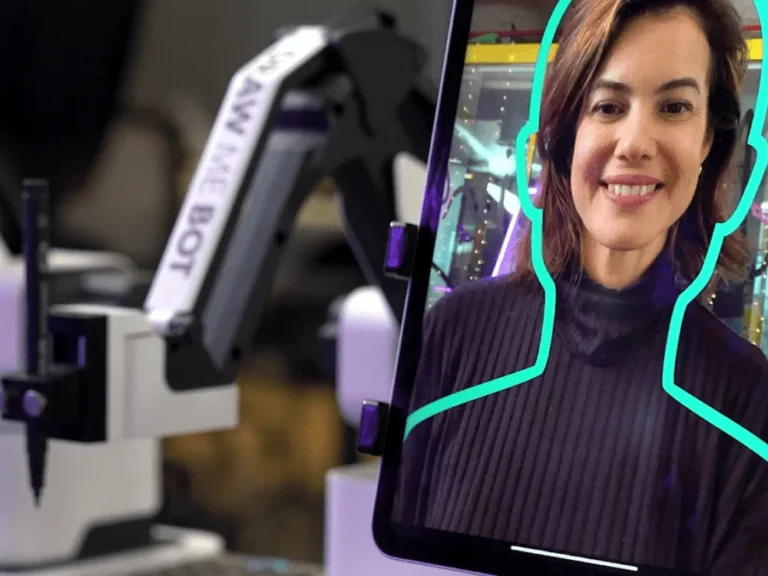
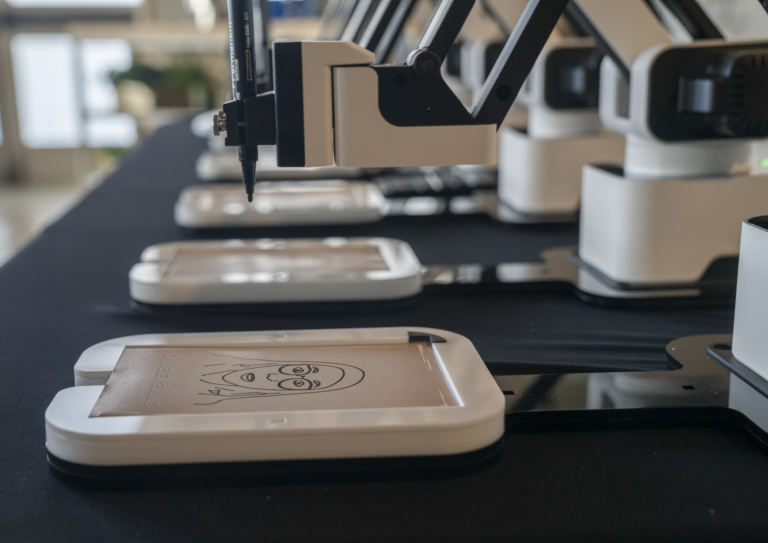
Robo Portraits is one example.
A guest has a photo taken, chooses a portrait style and watches a physical robot draw the portrait in pen.
They take the finished drawing home.

The process gives nearby guests something to watch even when they are not the person currently receiving a portrait.
Why it can fit a client appreciation evening
The experience does not require the whole room to stop.
Clients can:
- continue conversations;
- watch another portrait being drawn;
- have their own portrait created;
- compare the drawings afterwards;
- take the physical portrait home.
That makes it more compatible with a reception than entertainment that requires everyone to sit down at the same moment.
Our staff and corporate party package also covers client appreciation evenings. It starts from $1,395 CAD, plus applicable taxes, for 2 robots and 2 hours, with about 90 portraits of planning capacity. The attendant, setup and pack-down, and every portrait drawn are included.
Custom cards using the client’s design are available as an optional add-on.
Digital copies can be arranged in advance but are not a standard inclusion.
See the staff and corporate-event package
Do not turn appreciation into forced networking
The word networking can change how an event feels.
At a networking event, guests may expect to introduce themselves to strangers and make new business contacts.
At a client appreciation event, many attendees came because they already have a relationship with the host.
That means you do not necessarily need:
- assigned networking exercises;
- conversation cards;
- mandatory introductions;
- team-building games;
- structured rotations.
Clients may simply want to talk with the people they already know.
Make introductions where they are useful.
Do not turn the room into an exercise.
Your team still has a job: host
Entertainment does not replace hospitality.
Assign people from your organization to:
- greet clients;
- introduce guests who should know one another;
- make sure nobody is standing alone;
- thank people personally for coming;
- notice when a client wants conversation rather than another activity.
Do not let your whole team gather in one corner talking to each other.
And do not treat the evening as a lead-capture exercise.
You already know who your clients are.
Spend time with them.
Give clients enough time to talk
This may be the most overlooked part of the schedule.
Suppose you have:
- cocktails;
- dinner;
- speeches;
- trivia;
- a product announcement;
- a live act;
- awards;
- an interactive station.
There may technically be a lot happening.
But when do clients actually speak with their hosts?
For a relationship-oriented event, unstructured time is productive time.
Do not eliminate it.
A simple hypothetical client-evening schedule
You do not need a complicated run of show.
For example:
- 5:30Guests arrive; refreshments and optional activity begin
- 6:00Short welcome and thank-you
- 6:05Food and open conversation
- 6:30Optional activity continues
- 7:20Informal final call for the activity
- 7:30Event winds down
This is only an example.
The useful part is the ratio:
five minutes of company talking, plenty of time for clients to talk.
If there is a genuine educational component, add it intentionally rather than letting a short thank-you grow into a presentation.
Think carefully about the guest list
Not every appreciation event needs to include every client.
You might hold:
- one broad annual open house;
- several smaller dinners;
- a family event for local clients;
- a technical session for clients in one industry;
- a VIP experience for a smaller group.
Segmentation does not need to mean deciding which client “deserves” a better party.
Different relationships may simply suit different formats.
A small business owner may enjoy a practical workshop.
An executive team may prefer dinner.
A long-standing local client may be delighted to bring their spouse to a summer event.
Match the invitation to the relationship.
Make attendance easy
Client appreciation is undermined quickly by unnecessary friction.
Give invitees the practical information they need:
- date and time;
- location;
- expected dress;
- whether a guest is invited;
- parking or arrival information;
- approximate end time;
- whether the event includes dinner or lighter food;
- anything they need to know about participation.
Also provide a way to communicate accommodation or accessibility requirements before the event.
The Government of Canada’s inclusive event-planning checklist recommends considering barriers such as physical access, dietary requirements and other accommodation needs during planning, rather than after guests arrive.
The principle is simple:
Make it easy for the client to say yes and easy for them to participate once they arrive.
Be careful with branding
You are hosting a company event.
Of course your name will be present.
That does not mean your logo needs to cover every surface.
The strongest branding may simply be:
- a well-run evening;
- staff who remember people’s names;
- a thoughtful thank-you;
- an experience associated naturally with the host;
- a useful or personal takeaway.
If you use custom event materials, make them feel connected to the evening rather than turning every object into an advertisement.
With Robo Portraits, for example, standard packages use Robo Portraits cards. Custom cards using your design can be added when you want the portrait itself tied more directly to the event.
That can be appropriate for a company anniversary or client evening.
It is optional.
How much entertainment does a client event need?
Often not much.
A good rule is:
hospitality first, one anchor second.
For example:
Reception + live music
Dinner + no additional entertainment
Educational session + refreshments
Open house + robot portraits
Hosted outing + nothing else
The activity should make the event easier to enjoy.
It does not need to justify its existence by constantly demanding attention.
What should you measure afterwards?
Avoid judging the event only by how many people used the entertainment.
A client event may have succeeded because:
- the clients you hoped would attend came;
- your team spent useful time with them;
- clients stayed longer than expected;
- people from different parts of the relationship met one another;
- you identified issues or opportunities worth following up;
- clients simply seemed to enjoy the evening.
If there is legitimate business follow-up, do it.
But there is no need to turn the next morning into a mass sales campaign.
A personal message thanking someone for attending may fit the purpose of the event better.
Where Robo Portraits fits a Winnipeg client appreciation event
For staff and corporate events, including client appreciation evenings, Robo Portraits starts from $1,395 CAD before applicable taxes for two robots and two hours.
The standard package includes:
- two robots;
- two hours of drawing time;
- staffing;
- setup and operation;
- physical portraits on standard Robo Portraits cards.
For planning, two robots have an approximate two-hour capacity of 90 portraits.
That does not mean a 100-person client event guarantees 90 people will participate or that every attendee needs a portrait.
Set a participation target based on the event.
Custom cards with your design are optional.
Digital copies must be arranged before the event if required.
Travel is included within Winnipeg and up to 30 km beyond the Perimeter.
See Robo Portraits for corporate and client events
Planning a client appreciation event?
If you are considering Robo Portraits, send:
- your event date;
- location;
- approximate guest count;
- and the drawing window you are considering.
It also helps to tell us whether Robo Portraits will be the main activity or one part of a larger reception.
That gives us enough information to suggest a realistic setup.
Check your date and request a quote
Frequently asked questions
What is a good client appreciation event for a small group?
A lunch, dinner, private experience or small workshop can work particularly well because there is enough time to speak with everyone.
You do not necessarily need entertainment.
What works for a larger client list?
A reception or open-house format gives guests more flexibility to arrive, circulate and leave at different times.
One optional attraction can give the event a focal point without forcing everyone into the same activity.
Should a client appreciation event include a sales presentation?
Only if the information is genuinely useful and expected.
If the main purpose is appreciation, keep the company presentation short and give clients time to enjoy the event and speak with their hosts.
Should clients be allowed to bring a guest?
That depends on the event.
A social reception or hosted outing may lend itself to spouses or partners. A technical session or intimate business dinner may not.
State the invitation clearly so clients do not have to guess.
How many Robo Portraits can be drawn during a client event?
For conservative planning, use approximately 22 portraits per robot-hour.
A standard two-robot, two-hour corporate setup is approximately 90 portraits.
Those are approximate planning capacities rather than guaranteed participation.