In this guide
A photo booth and Robo Portraits can fill a similar place in an event plan: guests visit a station, participate for a few minutes and leave with something connected to the evening.
But they are not really the same type of experience.
Choose a photo booth when your priority is friends posing together, quick photo sessions and easy digital sharing or photo prints, depending on the package.
Choose robot portraits when you want the drawing itself to be part of the entertainment and you want guests to leave with a physical portrait drawn in pen.
Neither option is automatically better.
The right choice depends on what you want guests to do, what you want them to take home, and how many people you need to serve during the time available.
Robot portraits vs photo booth at a glance
| What matters | Robot portraits | Photo booth |
|---|---|---|
| Main experience | Watch a robot draw a portrait with a pen | Pose for photos, often with friends |
| Takeaway | Physical pen-drawn portrait | Prints, digital photos or both, depending on package |
| Entertainment while waiting | Guests can watch portraits being drawn | Usually centred on the people taking the photo |
| Group photos | Ask about group-portrait timing and capacity | Often a strong fit for several friends in one picture |
| Speed | Finite drawing capacity | Photo sessions can be quick; confirm how many guests they can realistically serve |
| Digital sharing | Available from Robo Portraits only if arranged before the event | Common with many modern booths, but package inclusions vary |
| Best fit | Watching something unusual happen and receiving personal artwork | Group photos, posing, props and photo sharing |
| Capacity planning | About 22 portraits per robot-hour | Ask the provider about sessions, prints and guest changeover |
| Staffing | Robo Portraits packages include staffing | Varies by provider and package |
On a small screen, swipe the table to compare both options.
The biggest difference is simple:
A photo booth creates a photograph. Robo Portraits turns a photograph into a live drawing experience.
What actually happens with Robo Portraits?
A guest steps up, has a photo taken and chooses a portrait style.
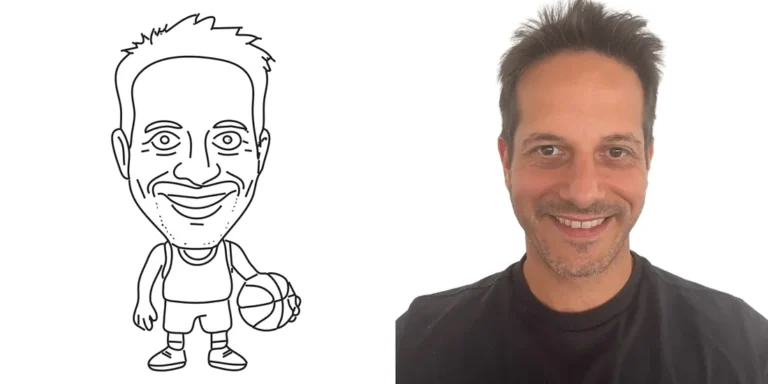
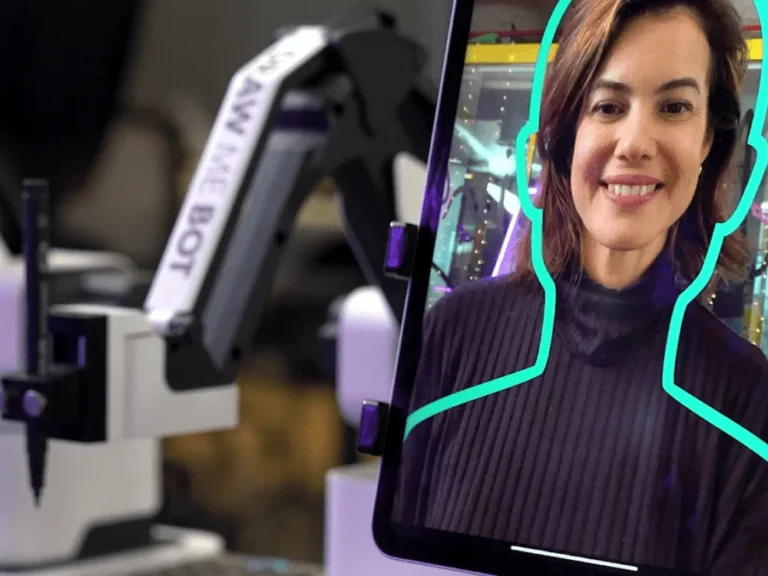
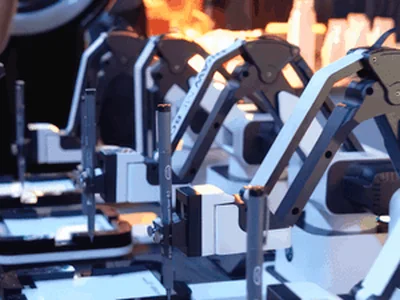
A physical robot then draws that portrait in pen. Guests can stand nearby and watch the lines appear until the drawing is finished.
The guest takes the drawing home.
That middle step is what changes the experience.
The photo is the starting point rather than the final product.
See how a Robo Portrait is created from photo to finished drawing
Robo Portraits offers realistic and caricature styles, and the drawing happens in view of the guest rather than being produced somewhere out of sight. See how it works.
What actually happens with a photo booth?
Photo booths vary much more than the name suggests.
You might encounter:
- an open-air camera and backdrop;
- an enclosed booth;
- a digital selfie station;
- a glam-style photo setup;
- a booth with props;
- a setup that prints photo strips;
- a digital-only booth.
Guests generally step into position, pose alone or with friends and see or receive their pictures.
Prints, props, galleries and instant digital sharing depend on the provider and package. WeddingWire’s photo booth guide also suggests checking whether a booth emails digital copies, prints them or does both before you book.
That makes the photo booth particularly useful when the photograph itself is the point.
Choose a photo booth if group photos are the priority
This is probably the clearest advantage of a traditional photo booth.
If you picture four friends squeezing into a frame, a family posing together, colleagues grabbing props or the wedding party taking silly pictures, a photo booth naturally serves that moment.
Multiple people can often participate in the same session.
That can be important at:
- weddings;
- staff parties;
- grads;
- birthday parties;
- socials;
- events where groups of friends already know each other.
Robot portraits can include group formats, but drawing a group is different from taking one quick group photograph. If group portraits will be an important part of your Robo Portraits booking, tell us in advance so timing and capacity can be planned appropriately. Our capacity estimates are mainly for individual portraits.
If your main goal is simply “we want lots of pictures of friends together”, the photo booth has a strong case.
Choose robot portraits if watching the process matters
With Robo Portraits, the activity is not finished when the photo is taken.
That is when the interesting part starts.
The robot begins drawing with a real pen, and guests can watch the portrait take shape.
That creates two ways to participate:
- Get your own portrait.
- Watch somebody else’s portrait being drawn.
For an event planner, that distinction matters.
Not everyone has to be the person currently at the station for the activity to have something happening visually.
That can suit cocktail hours, receptions, staff parties and galas where guests are already circulating and looking for things to do between the main parts of the program.
Choose a photo booth if fast, repeated interactions matter more
A photo booth does not need to physically draw each photograph line by line.
That can make it better suited to an event where you want many short interactions and do not need the production process itself to be the attraction.
Do not assume every booth has unlimited practical capacity, however.
Guests still need time to enter the area, pose, select options and potentially wait for printing or sharing. The sensible question for any provider is:
“During the hours I am booking, how many guest sessions can you realistically handle?”
That is more useful than asking for the fastest possible photo time.
But if serving as many guests as possible is one of your main priorities, a photo booth deserves serious consideration.
Robot portraits require more deliberate capacity planning
A robot can only draw one portrait at a time.
Robo Portraits therefore plans around approximately 22 completed portraits per robot-hour.
For a standard two-hour period:
| Robots | Approximate portrait capacity |
|---|---|
| 1 | 45 portraits |
| 2 | 90 portraits |
| 3 | 130 portraits |
These are planning estimates.
They do not mean every guest at an event is guaranteed a portrait. Actual numbers depend on portrait style and event conditions.
It is also important not to confuse attendance with required portrait capacity.
Suppose your wedding has 150 guests.
You may not need 150 portrait slots. During the same two hours, people may be eating, talking, dancing, visiting the bar or doing other activities.
The better planning question is:
How many of our guests do we want to be able to get a portrait during this particular window?
Our detailed capacity guide explains how robot count, drawing time and expected participation fit together.
See the Robo Portraits capacity-planning guide
Think about the keepsake: photograph or drawing?
This is less about technology than taste.
Ask what you would rather see guests carrying around later in the evening.
With a photo booth
The takeaway might be:
- a photo strip;
- a larger printed photograph;
- a digital image;
- a gallery entry;
- or some combination of those.
Confirm the exact package before booking.
With Robo Portraits
The standard takeaway is a physical portrait drawn in pen on a Robo Portraits card.
Standard packages include the physical portraits created during the booked drawing time.
Custom cards using the client’s design are available as an optional add-on.
Digital copies can also be arranged, but they are not a standard inclusion. They must be requested before the event.
If digital distribution is central to your plans, say so before you book either option.
Think about how social you want the activity to be
Both experiences can be social, but in different ways.
The photo-booth version of social
Friends step into the picture together.
The interaction is between the people being photographed.
They pose, choose props if available, laugh at the result and potentially share it.
The Robo Portraits version of social
Someone gets drawn while other people can watch.
Guests may compare the finished drawings or gather around while the robot works.
The interaction is partly about watching something being made.
Neither is inherently more social.
They simply create different social moments.
If your guests are already organised into friendship groups and you want those groups photographed together, lean toward a booth.
If your guests include people who do not all know one another and you want a visible activity they can stop and watch, the drawing process may be more useful.
Think about the guests who do not want to pose
Not everyone loves being photographed.
That does not mean they will necessarily want a robot portrait either—the process still begins with a photo.
But the surrounding activity is different.
Someone can watch the robot drawing without having a portrait made.
Likewise, a guest can watch friends use a photo booth without participating.
This is worth remembering when choosing any interactive entertainment: participation should feel optional.
The best station is one that adds something to the evening without making reluctant guests feel that they have to perform.
Compare the whole package, not just the headline price
It is difficult to compare the price of “a photo booth” with “robot portraits” without knowing what the booth includes.
A quote might include some combination of:
- operating time;
- attendant;
- prints;
- props;
- backdrop;
- setup and removal;
- digital sharing;
- custom photo layouts;
- travel.
Another provider may package those items differently.
So do not compare two headline prices unless the scopes are actually comparable.
For Robo Portraits, current starting packages are:
- Birthdays and small socials: from $799 CAD, with 1 robot for 2 hours.
- Weddings, wedding socials and grads: from $1,195 CAD, with 2 robots for 2 hours.
- Galas, fundraisers and schools: from $1,195 CAD, with 2 robots for 2 hours.
- Staff and corporate parties: from $1,395 CAD, with 2 robots for 2 hours.
Prices are before applicable taxes.
Standard packages include staffing, setup, operation and physical portraits on standard Robo Portraits cards.
Larger setups, additional drawing time and optional custom cards can be included in the individual quote.
Your quote shows every line before you book.
When comparing that with a photo booth quote, look at what you are receiving rather than just which number is lower.
Which works better at a wedding?
Either can make sense.
A photo booth may fit better when:
- you want photos of couples and groups of friends;
- you want guests to make repeated visits;
- digital sharing matters;
- props or a particular photo backdrop are part of the concept;
- the photos themselves are the main takeaway.
Robo Portraits may fit better when:
- you want entertainment people can watch during cocktail hour or the reception;
- you want guests to leave with artwork rather than another photograph;
- the novelty of a robot physically drawing is part of the appeal;
- you can define a realistic drawing window and participation target.
Robo Portraits wedding bookings start from $1,195 CAD before tax for two robots and two hours.
See how Robo Portraits fits into a Winnipeg wedding
For help planning the full evening, see our guide to wedding reception entertainment ideas in Winnipeg, from cocktail hour through late reception.
Which works better at a staff or corporate party?
Again, start with the objective.
If you want colleagues posing together and leaving with team photographs, a photo booth can be an excellent fit.
If you want an activity colleagues can watch, try individually and compare afterwards, robot portraits create a different type of interaction.
For a company event, also think about whether the takeaway matters after the night is over.
A photo can document who attended.
A portrait can function more like a personal souvenir.
Robo Portraits staff and corporate-party packages start from $1,395 CAD before tax for two robots and two hours.
See the Robo Portraits staff and corporate-event setup
Still considering other formats for your company event? Compare corporate event entertainment ideas in Winnipeg by the experience you want for colleagues.
When would I choose the photo booth?
Choose the photo booth if most of these sound right:
- “We really want pictures of groups of friends.”
- “Guests should be able to make quick visits.”
- “Digital sharing is important to us.”
- “We like props or a themed backdrop.”
- “The photograph is what we really want people to keep.”
- “We expect a lot of participation in a short period.”
Then ask potential providers exactly what their package includes.
When would I choose Robo Portraits?
Robo Portraits is worth considering if these sound more like your event:
- “We want an activity people can actually watch.”
- “We want the takeaway to be different from another photograph.”
- “A physical drawing fits our event.”
- “Guests will be mingling and visiting activities throughout a defined window.”
- “We are comfortable planning around a specific portrait capacity.”
- “The process of making the keepsake matters as much as the keepsake.”
That is the main distinction.
A photo booth is largely about the picture. Robo Portraits is about the drawing and the picture becoming something else.
You do not necessarily have to choose one
At some larger events, the two can perform different jobs.
A photo booth might handle group photographs while Robo Portraits produces individual keepsakes.
That only makes sense if the budget, space and program support two stations.
Do not add both just to have more entertainment.
Add both when you can explain why each one is there.
Five questions to ask before booking either one
Before choosing, get clear answers to these:
1. How many guests do we actually want to participate?
Do not automatically use total attendance.
Decide whether participation by everyone is important or whether the activity is simply one option during the event.
2. When will people use it?
A two-hour cocktail reception can create concentrated demand.
A long reception may spread participation over several hours.
Timing can affect the right setup as much as guest count.
3. Do we want groups or individual keepsakes?
If group photos are central to your plan, that points strongly toward a photo booth.
If personal artwork is more appealing, robot portraits deserve a closer look.
4. What exactly is included?
For a photo booth, ask about prints, digital copies, props, backdrop, staffing, setup, operating time and sharing.
For Robo Portraits, your quote defines the drawing time, robot setup and any optional items.
5. What happens if everyone wants to participate at once?
Ask this before the event, not when the line forms.
With Robo Portraits, capacity can be planned using robot count and drawing time.
With a photo booth, ask the provider how many sessions they can realistically run and how queues are normally managed.
Still deciding?
If you are considering Robo Portraits, send us four things:
your event date, location, approximate guest count and the drawing window you are considering.
We can then recommend a setup based on expected use rather than simply matching a package to the number of people in the room.
Check your event date and request a Robo Portraits quote
And if you are also considering a live artist, our broader guide compares all three categories.
Compare robot portraits, a caricature artist and a photo booth
Frequently asked questions
Are Robo Portraits a type of photo booth?
Not really.
Both start with a photo, but Robo Portraits uses that image as the starting point for a physical drawing. A robot draws the portrait in pen while guests can watch.
With a photo booth, the photograph itself is normally the output.
Are photo booths faster than robot portraits?
A robot must physically draw each portrait, so its output is deliberately finite. Robo Portraits uses approximately 22 portraits per robot-hour for planning.
Photo-booth speed varies significantly by setup. Rather than relying on a generic speed comparison, ask a provider how many sessions they can realistically handle during your booked time.
Can everyone at my event get a robot portrait?
Possibly, but it depends on the number of intended participants, robots and drawing hours.
For example, two robots produce approximately 90 portraits in two hours, while three produce approximately 130.
Those figures describe approximate capacity. They are not a guarantee that every attendee will receive a portrait.
Do Robo Portraits include digital photos?
The standard takeaway is the physical pen-drawn portrait.
Digital copies are available on request but must be arranged before the event.
Which is better for a large group of friends?
If the goal is to put several friends into one picture quickly, a photo booth will often be the more natural choice.
If the goal is to give people individual drawings and let them watch those drawings being made, Robo Portraits serves a different purpose.